7 Schroth Method Exercises for Better Posture and Spine: Boost Core Strength for Scoliosis Posture Correction and Spinal Alignment in the Philippines
Man, dealing with scoliosis is no joke—I’ve seen it firsthand with people I know, that constant nagging pull where one shoulder rides higher than the oth
er, or your hips decide to play favorites and tilt just enough to mess with your stride. It turns everyday things, like grabbing coffee or scrolling on your phone, into these little battles where you’re always adjusting, always compensating. And don’t get me started on how it sneaks into your head, making you second-guess your reflection or avoid photos. The kicker? You don’t need to stare down a surgeon’s schedule to start fighting back. Enter the Schroth Method—it’s this straightforward, evidence-based trick that’s been around for decades, all about teaching your body to move smarter, not harder. We’re talking targeted tweaks to your breathing, core work that actually sticks, and scoliosis exercises that nudge your spine toward something closer to straight. Give it time, and those off-kilter days start feeling less like the boss of you—especially with non surgical scoliosis treatment Philippines options making it easier than ever to access expert care right at home.
Take my cousin, for instance—she’s had this stubborn thoracic scoliosis curve since high school, the kind that had her in a brace that felt like a medieval torture device. Fast-forward a decade, kids and a desk job later, and she was slumping worse than ever, popping painkillers like candy for that nagging back pain relief. Then a coworker tipped her off about Schroth, and she gave it a shot at a local non-surgical scoliosis specialist. Nothing dramatic at first—just weird breathing drills and these awkward poses against the wall—but three months in? She’s texting me pics of her standing taller, no more hunching over the steering wheel. It wasn’t some fairy-tale fix; she had to show up, sweat a bit, and remind herself daily. But that’s the real sauce here: doable habits that fit into real life, not some impossible overhaul, with a focus on building core stability and improving scoliosis posture through physical therapy for scoliosis.
Core Strength for Scoliosis: Your Secret Weapon Against Curve Progression
Let’s cut to the chase: in scoliosis world, your core strength isn’t just for those beach-ready abs. It’s the unsung hero holding your spine steady like a custom-fitted scaffold, key for muscle imbalance correction and curve progression control. When one side’s pulling harder than the other, weak spots in your midsection let the curve call the shots, ramping up pain or even nudging the bend further along. Ouch—especially with lumbar scoliosis or thoracic scoliosis throwing off your whole rhythm.
The Schroth Method flips that script by zeroing in on core stability and posture correction. You’re not blasting out crunches; it’s more like awakening those deep-layer muscles—the ones hugging your ribs, gut, and low back—for scoliosis therapy for core muscles. Therapists guide you to fire them up in ways that coax your spine toward neutral, offering benefits of core training for scoliosis like better spinal balance and exercise for spine support. Do this right, and suddenly your posture perks up, your back quits whining, and daily life feels less like a balancing act on a wobbly board. It’s not overnight, but man, the payoff in spinal health and that easy confidence? Worth every breath, with core-based scoliosis exercises strengthening weak spinal muscles.
How Non-Surgical Scoliosis Therapies Help with Posture and Spinal Health
What I love about non-surgical scoliosis therapy is how it hands the reins back to you. Forget the one-size-fits-all brace or the OR drama—Schroth is personal, like a coach spotting your exact quirks and building from there. Sessions mix hands-on tweaks from your therapist, funky breathing drills, and core zaps that hit the curve head-on while dialing back those sneaky compensations your body throws up, all part of a non-surgical scoliosis care approach.
Take places like Posture Aid Physiotherapy Services in Manila—they’re nailing this blend of hard science and real-movement magic for non-surgical scoliosis in Manila, and broader non-surgical scoliosis treatment Philippines. I’ve heard from folks who’ve walked in crooked and walked out with a plan that sticks: custom non-surgical scoliosis treatment that targets their mess without the mess of recovery downtime, including rehab exercises in Manila. It’s empowering, you know? You’re not passive; you’re the one reshaping your alignment through posture and core alignment techniques, making therapy for scoliosis patients feel like a partnership.
Safe Scoliosis Exercises for Core Stability: Building Balance Without the Risk
No two curves are twins, so Schroth kicks off with a deep dive into yours—where it bends, how it rotates, the works. From that blueprint, your therapist pulls scoliosis exercises tailored to drag things back toward symmetry. Safety first, always: these aren’t gym-bro lifts; they’re slow-burn moves done with eyes on form, emphasizing spine health and exercise safety to avoid setbacks.
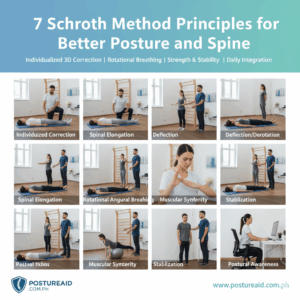
Here’s a rundown of some go-to safe scoliosis workouts for core stability that pop up a lot. (Pro tip: Grab a mirror or a buddy for feedback, but don’t overdo the staring—feel it more than fixate.) These core muscle engagement drills are perfect for improving spine alignment and back pain relief.
- Elongation Breathing: Lie on your back or stand tall, hand on your concave-side ribs. Inhale deep, picturing air inflating that sunken pocket like a balloon. Hold, then exhale slow. This isn’t just zen stuff—it stretches your spine longer, boosts lung power, and eases that rib-hunch tightness. Aim for 10 breaths, twice daily—to build core stability.
- Pelvic Tilts and Corrections: On all fours or supine, rock your pelvis gently—tilt forward to flatten your low back, then neutral. Add a side-shift if your hips are off-kilter. It’s gold for redistributing weight evenly, killing that lopsided sway. Do 8-10 reps per side; feel the core engage like a gentle hug around your spine for spinal balance.
- Shoulder Blade Squeezes (aka Setting): Sit or stand, arms loose. Pinch your scapulae together like you’re cradling a walnut between them, without shrugging. Hold 5 seconds, release. This counters the forward slump, waking up those upper-back slackers. 12 reps, and boom—posture starts whispering “straighten up” on autopilot.
- Single-Leg Lifts with a Twist: Side-lying on your convex side, lift the top leg slow while breathing into the curve. Keep hips stacked—no wobbling. It fires the low core and obliques, stabilizing your pelvis like nobody’s business. 6-8 lifts per side; build as you get steady—for core training benefits.
- Wall Rotations for Spinal Smarts: Back to the wall, feet shoulder-width. Rotate your torso opposite your curve while pressing one hand into the wall for leverage. Breathe out on the turn, in on the return. This dials up body awareness, reinforcing that three-way alignment fix. 5-7 turns each way.
- Side-Lying Rib Openers: On your concave side, prop on elbow, stack legs. Inhale to lift ribs skyward, exhale to settle. It’s a sneaky core and breath combo that uncrunches your torso. 8 breaths per session.
- Prone Cobra with Breath: Face-down, arms at sides. Lift chest and legs slightly, thumbs up, while exhaling into the tight spots. Hold 3-5 breaths. Targets the whole posterior chain for that upright posture punch and improving scoliosis posture.
Mix these in under guidance—rushing solo can backfire. But done right? They’re your ticket to balanced movement without the drama, with scoliosis therapy programs designed for long-term wins.
Posture Correction Through Therapy: The 3D Schroth Edge
Generic planks? Yawn. Schroth goes full dimension: rotational, lateral, and sagittal all in play. It’s not just straightening; it’s derotating that twisty bit and leveling the side-bend for improve spine alignment. Therapists use their hands like GPS signals—pressing here, cueing there—plus mirrors so you clock the shift yourself. Sync it with Schroth breathing (inhale to expand the pinched side, exhale to lengthen), and you’re lengthening tight bits while powering up the wimps.
I saw this in action at a demo once: a guy with lumbar scoliosis went from caved-in to open-chested in one session, all because he finally felt the neutral. Over weeks, it snowballs—your posture evolves from forced to fluid, spine alignment clicks into place, and that nagging unevenness fades. It’s transformative, shifting not just stance but how your body thinks about balance through posture and spinal health.
Non-Surgical Scoliosis in Manila Programs: Your Local Path to Relief
Manila’s waking up to this—folks ditching the “wait and see” for proactive non-surgical scoliosis therapies, part of the growing wave of non-surgical scoliosis treatment Philippines. Spots like Posture Aid Physiotherapy Services are leading the charge with Schroth and SEAS protocols, crafting programs that hit thoracic scoliosis twists, lumbar scoliosis leans, or combo curves right where they live. Expect core drills, hands-on mobilizations, and homework on how to sit/stand/move without undoing gains.
It’s not cookie-cutter; your curve’s blueprint dictates the mix. Patients rave about the sustainability—no brace itch, just tools for life. And with non-surgical scoliosis in Manila gaining steam, it’s easier than ever to access without jetting off. If you’re local, why not scout a consult? Early birds get the straighter wings and better posture and core alignment techniques.
Expert Non-Surgical Scoliosis Specialist Tips: Straight from the Pros
I’ve picked brains from pros in the trenches, and here’s the unfiltered gold they drop from a non-surgical scoliosis specialist:
- Consistency is Queen: Hit those sessions weekly, then home-practice like it’s your side hustle. Skip days, and progress naps—for rehabilitation for scoliosis.
- Breathe Like You Mean It: Schroth breathing isn’t optional—it’s the engine expanding caves and propping posture correction. Practice off the mat.
- Ditch the Mirror Mania: Sure, check form, but tune into sensations. Looks can lie; feels don’t.
- Quality Over Quantity: Five mindful reps beat 50 sloppy ones. Precision builds the real core stability.
- Ease In, Don’t Force: Core endurance grows like a slow-bloom flower. Push too hard, and you’ll tighten up worse—focus on safe scoliosis workouts.
Bonus: Track wins in a journal—less pain days, easier outfits. It keeps the fire lit for managing scoliosis naturally.
Core Training for Spinal Balance: Leveling Up Your Strength Game
Core work in scoliosis? It’s the glue. A lopsided core lets the spine sag; balance it, and everything else chills out—less pull on flanks, no more overworked traps. Non-surgical therapy hones in on the transverses (that deep gut band) and multifidi (tiny back stabilizers), teaching you to zip ’em like a corset for core training benefits.
Precision rules: therapists tweak til you’re engaging without strain, matching your curve’s vibe. Result? Spinal balance that hums, posture that holds sans effort, and bye-bye to that curve-fueled ache. It’s quiet power—intensity’s for show-offs; this is for lasting wins in strengthening weak spinal muscles.
Rehabilitation for Scoliosis Patients: Recovery Minus the Scalpel
Rehab ain’t just reps; it’s habit hacks. Schroth rewires your defaults—sit with ribs lifted, stand hips even, walk without the lean. Blend in manual therapy (gentle spine nudges), core circuits, and breath bosses, and you’re golden in-clinic and beyond for therapy for scoliosis patients.
Folks wrap programs and still catch themselves auto-correcting at the office or grocery run. That’s the beauty: non-surgical scoliosis therapy isn’t a band-aid; it’s a masterclass in spine stewardship. Pain dips, mobility spikes, and you reclaim that “me” without the curve stealing spotlight—hello, back pain relief.
Managing Scoliosis Naturally: Exercise, Therapy, and Everyday Wins
Who says scoliosis sentences you to surgery purgatory? Schroth proves otherwise—natural fixes via smart moves and insight, aligning perfectly with non-surgical scoliosis treatment Philippines trends. At Posture Aid Physiotherapy Services, therapists who geek out on biomechanics guide your arc: from curve decode to strength symphony in scoliosis therapy programs.
Chasing posture correction? Spinal alignment glow-up? Core fortification? They’ve got the evidence-based playbook for non-surgical scoliosis treatment. And across the Philippines, these non-surgical scoliosis therapy hubs are sprouting, democratizing access. No more “tough it out”—just empowered, aligned living through physical therapy for scoliosis.
Wrapping It Up: Your Path to Better Posture and Spinal Health
Scoliosis doesn’t get to dictate your posture or peace. The Schroth Method arms you to rewrite the rules—taller stance, freer breaths, balanced stride with improving spinal alignment. At Posture Aid Physiotherapy Services in Manila, journeys spark with your story and seal with swagger. Dive into non-surgical scoliosis therapy there, and watch comfort and confidence compound. It’s not hype; it’s your sustainable shot at spinal harmony—ready to build core stability? Your mirror’s waiting.