As a parent in the Philippines, you want the best for your child’s health. Scoliosis often develops quietly during growth years, and many cases go unnoticed until a routine check-up or school screening. Spotting the early signs of scoliosis can make a big difference, allowing for timely non-surgical scoliosis in Philippines care before the curve progresses.
Scoliosis treatment Philippines focuses on gentle, effective approaches that help manage the condition without surgery. Knowing what to look for at home empowers you to act early and support your child’s spinal health.
Scoliosis Treatment Philippines: Why Early Detection Matters
 In growing children and teens, the spine can curve and rotate quickly during growth spurts. Early identification gives more options for conservative management through exercises, posture work, and supportive therapies.
Scoliosis rehab Philippines programs often combine scoliosis-specific methods with stretching techniques and massage therapy to improve alignment, flexibility, and comfort. The sooner parents notice changes, the better the chances of keeping curves mild and avoiding more invasive steps later.
Common Early Signs of Scoliosis Parents Should Check
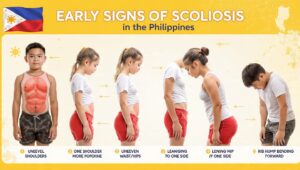
Many early signs are subtle and painless, which is why they get overlooked. Here are the key things to watch for when your child is standing, walking, or getting dressed:
- Uneven shoulders — One shoulder sits higher than the other or one shoulder blade sticks out more.
- Uneven hips or waist — One hip appears higher, or the waistline looks asymmetrical.
- Visible rib prominence — When your child bends forward (Adam’s forward bend test), one side of the ribs or back may look higher.
- Clothes that fit unevenly — Pant legs or shirt hems hang differently on each side, or the child seems to lean slightly to one side.
- Head not centered — The head may tilt slightly even without neck pain.
- Changes in posture or gait — The child may stand or walk with a slight tilt or complain of fatigue after sitting or standing for long periods.
These signs do not always mean scoliosis is present, but they warrant a professional check. Regular posture observation at home is a simple form of self-care every parent can practice.
The Role of Stretching Techniques in Supporting Young Spines
Once a mild curve is identified, stretching techniques become a valuable part of non-surgical scoliosis treatment philippines. Gentle stretches help lengthen tight muscles on one side of the curve and strengthen weaker areas on the other.
Assisted stretching guided by a trained professional ensures safe movement tailored to your child’s curve pattern. Over time, consistent stretch work can enhance flexibility, improve range of motion, and support better overall posture.
Parents can learn simple home stretches that complement clinic sessions, turning daily routines into helpful self-care moments.
How Massage Therapy Helps in Scoliosis Management for Children
Massage therapy offers gentle relief by releasing tension in muscles that work harder to compensate for the spinal curve. A skilled massage therapist experienced with scoliosis uses techniques that promote relaxation and better blood flow without forcing the spine.
When combined with stretching, stretching and massage creates a soothing loop: massage loosens tight areas, and stretching builds on that openness. Many families in the Philippines include regular massage as part of their child’s weekly routine to reduce muscle soreness and support comfort during growth.
Post-massage stretching or light self-stretches at home helps maintain the benefits between sessions.
Benefits of Stretching for Scoliosis in Growing Children
Benefits of stretching go beyond flexibility. For children with scoliosis, targeted stretches can:
- Improve muscle balance around the spine
- Support better body mechanics during school, sports, and play
- Reduce feelings of stiffness or fatigue
- Help maintain good posture as the child grows
Static stretch holds and gentle dynamic movements are often recommended. When done consistently and correctly, they become an empowering part of self-care that children can continue independently as they get older.
Stretching and Massage Therapy: A Supportive Combination
Many scoliosis treatment Makati and Manila clinics integrate stretching and massage therapy into personalized plans. Starting a session with massage to relax muscles, followed by guided assisted stretching, often yields better movement and comfort.
This combination is especially useful for active children who want to stay involved in sports or dance while managing their scoliosis.
Self-Care Strategies Parents Can Use at Home
Self-care plays a vital role alongside professional care. Simple steps parents can encourage include:
- Daily posture checks in front of a mirror
- Short stretch routines in the morning or after school
- Encouraging movement breaks during long study sessions
- Scheduling regular massage with a massage therapist familiar with scoliosis
- Practicing good body mechanics when carrying school bags or using phones
These small habits support scoliosis rehab philippines efforts and help children feel more in control of their bodies.
Advanced Non-Surgical Options Available in Makati and Manila
For families seeking expert care, non-surgical scoliosis treatment philippines offers several proven approaches:
- Schroth Method and Schroth Method Therapy makati — Customized 3D exercises and breathing techniques designed specifically for scoliosis
- SEAS Scoliosis Therapy manila — Scientific exercise approach focused on self-correction and stability
- Craniosacral Therapy makati — Gentle hands-on work to ease tension
- Dry needling for scoliosis treatment philippines — Targeted release of muscle trigger points when needed
These methods are frequently combined with massage therapy and stretching techniques to create comprehensive, age-appropriate plans.
Early action gives children the best opportunity to manage scoliosis effectively. If you notice any of the signs mentioned — uneven shoulders, hips, or a rib prominence when bending forward — consider consulting a specialist in scoliosis treatment in the philippines.
Many parents in the Philippines find reassurance and real progress through non-surgical scoliosis in Philippines programs that emphasize stretch, massage, proper posture, and consistent self-care. Taking notice early and seeking professional guidance can help your child stay active, confident, and comfortable throughout their growing years.
Have you ever heard of Scoliosis Rehab Philippines?
That’s what we do here at Posture Aid – Scoliosis Center and Physical Rehab.
Unit 1701 Centuria Medical Makati Century City, Makati City
Non-surgical Scoliosis Treatment Makati
0917 710 4404
87129752