How Can I Straighten My Scoliosis Without Surgery?
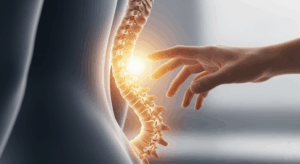
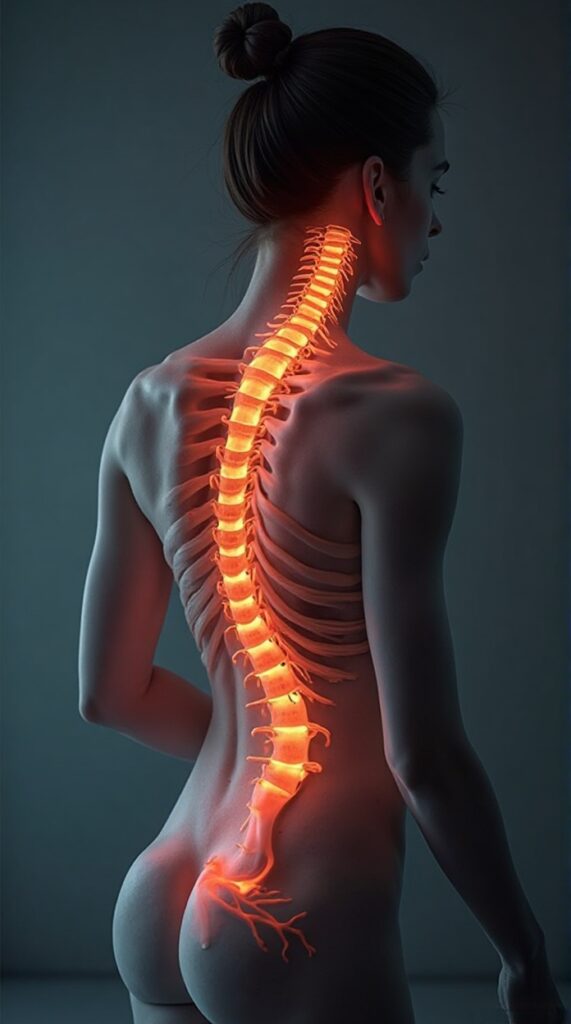
Ever glanced in the mirror and noticed your shoulders don’t quite line up? That could be scoliosis—a sneaky curve in your spine that throws things off balance. Surgery might flash through your mind, but hold up! Most folks dodge the operating table by tackling scoliosis treatment with exercises, braces, or physical therapy. At Posture Aid, we’ve seen how these options keep spines strong without a scalpel, and we’re here to break it down for you.
Let’s dive into practical ways to treat scoliosis without surgery, whether you’re a teen spotting early signs or an adult managing back pain. Your spine deserves some love, and we’ve got the scoop.
Understanding Scoliosis and the Curvature of the Spine
Imagine your spine as your body’s trusty backbone—usually straight from the back view. With scoliosis, it bends into an S or C shape, sometimes mild, sometimes enough to cause discomfort. You might feel uneven hips or ache after standing too long. It’s not always a big deal, but knowing what’s up helps.
Scoliosis comes in flavors. Adolescent idiopathic scoliosis often pops up during those wild teen growth spurts—think no clear cause but maybe a family history of scoliosis in the mix. Adults might face degenerative scoliosis as joints wear out, or neuromuscular scoliosis tied to conditions like cerebral palsy. Figuring out your type is step one to a plan that fits.
Diagnosing Scoliosis: When to Seek Help
Scoliosis doesn’t always wave a red flag. Maybe your shirt hangs lopsided, or one hip sits higher. Kids might lean to one side, while adults notice back pain after a desk marathon. Stiffness or a shoulder blade sticking out? That’s your cue to check in.
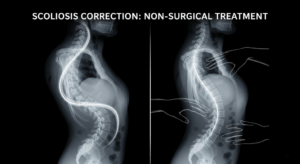
A spine specialist can size up the spinal curvature with an X-ray, catching scoliosis early before it worsens. Early moves like exercises or bracing can prevent the need for surgery down the road.
Ways to Treat Scoliosis Naturally
Surgery doesn’t have to be the go-to for every spinal curve. Plenty of folks find relief by focusing on keeping their spine flexible, easing back pain, and slowing things down before they worsen. Think scoliosis exercises, a good brace, or even a chiropractic session—these nonsurgical treatment options work wonders, especially for people with scoliosis dodging spinal fusion.
At Posture Aid, we’ve watched so many thrive with these approaches. Let’s chat about what might suit you—whether it’s home exercises or a tailored plan to manage scoliosis.
Exercises for Scoliosis: Moves That Make a Difference
Why let a curve hold you back? Scoliosis exercises strengthen the muscles around your spine, helping treat scoliosis naturally. A solid core can stabilize the spine, while stretches loosen tight spots. Picture this: a quick side stretch to ease that curve, or a plank to build backbone strength.
One client swore by gentle yoga—downward dog worked wonders for her spine flexibility. Tailored exercise programs, guided by a pro, beat one-size-fits-all routines. Stick with it, and you might ditch some back pain while supporting your spine.
The Schroth Method: A Down-to-Earth Way to Ease Scoliosis Treatment
Stumbled across the Schroth Method yet? It’s making waves as a practical scoliosis treatment, perfect for anyone wanting to skip surgery. This approach uses Schroth exercises—custom stretches and breathing tricks designed for your spine’s unique curve, with a therapist guiding the way. It’s less about flashy fixes and more about easing into better posture day by day.
Take my buddy Sarah, a mom tackling adult scoliosis. She jumped into Schroth a few weeks back, and her back pain’s already quieter—her curve’s holding steady without an operation. These scoliosis-specific exercises focus on corrective moves that can slow the progression of scoliosis, a real plus for adolescent idiopathic scoliosis cases in teens.
Building Your Own Exercise Plan for Scoliosis Management
Ready to work on that curved spine? Toss together some exercises and stretches that feel right. At home, try cat-cow stretches—get on all fours and roll your back up and down like a stretching cat—or pelvic tilts to loosen up tight spots. For scoliosis in adults, a chiropractic session might help align the spine without bracing or surgery.
Keep it up! Regular sessions can stop scoliosis from turning into severe cases where surgery to correct feels like the only option. It’s about finding a treatment plan that fits your patient’s spine and sticking with it.
Bracing: A Smart Move to Stabilize the Spine
For growing teens with a progressing curve, a brace is a lifeline. It won’t cure scoliosis but holds the spinal curve steady during growth spurts, often skipping spinal surgery. Wear it as directed—yeah, it’s a commitment—but it pays off.
Adults sometimes use braces for pain relief, supporting the spine during flare-ups. It’s a practical treatment option to explore.
Managing Adult Scoliosis
Adult scoliosis, whether from youth or degenerative changes, calls for a different game plan. Focus on pain relief and mobility with physical therapy or core exercises. One guy in his 40s cut his discomfort in half with a tailored routine—proof it works.
Regular check-ins with a spine specialist keep curves from hitting surgery territory.
Can Exercises Really Fix Scoliosis?
Let’s be real: exercises won’t magically straighten the spine if the curve’s set. But they can lighten the load—less pain, better balance, and halted progression. People with scoliosis often feel stronger after sticking with an exercise program, like they’ve taken charge.
It’s about long-term spine support, not a quick fix. Pair it with bracing or therapy for the best shot.
Your Personalized Plan to Treat Scoliosis Without Surgery
Every spine tells a different story. Teens might lean on bracing, while adults tweak with exercises. If scoliosis runs in your family, early monitoring pays off.
Stumped? Hit up http://postureaid.com.ph/ for a free consult—they’ll tailor treatment options to your scoliosis type. Most skip surgery with consistent care—your spine’s got this!
Surgery’s a last resort for severe scoliosis affecting breathing or nerves, but for many, these natural tweaks keep life moving. Give your back some love and explore what fits.