If you’re searching for non-surgical scoliosis treatment Philippines, the good news is that there are evidence-based, conservative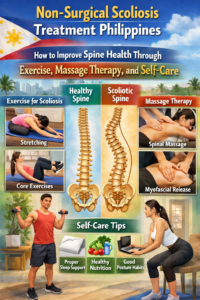 options available that focus on functional improvement, pain reduction, muscle balance, posture correction, and long-term spinal health — without surgery.
Non-surgical scoliosis treatment prioritizes active rehabilitation approaches such as corrective exercise, targeted stretching techniques, massage therapy, and self-care strategies to enhance flexibility, increase range of motion, and improve body mechanics. These methods address the muscular imbalances and postural deviations that often accompany scoliosis.
One valuable resource for understanding corrective exercise in scoliosis is the SEAS Scientific Exercise Approach to Scoliosis — a structured exercise protocol designed for spinal rehabilitation. You can read more about this method here: https://postureaid.com.ph/improve-scoliosis-with-seas-a-scientific-exercise-approach/. Additionally, the Scoliosis Correction Center Philippines shares therapeutic insights, community support, and ongoing non-surgical treatment updates at https://www.facebook.com/scoliosiscorrectioncenterphilippines.
What Non-Surgical Scoliosis Treatment Philippines Really Means
Non-surgical scoliosis treatment Philippines refers to a conservative approach that avoids operations unless absolutely necessary. Instead, emphasis is placed on rehabilitation strategies that empower patients to:
-
Actively manage posture
-
Improve flexibility and range of motion
-
Reduce muscle stiffness and tightness
-
Correct imbalances in body mechanics
-
Maintain long-term spinal health
This approach applies to adolescents and adults alike and is widely accepted in practice because it addresses the functional components of scoliosis rather than merely monitoring curvature progression.
SEAS and Corrective Exercise for Scoliosis Rehabilitation
A cornerstone of non-surgical scoliosis management is exercise-based rehabilitation. The Scientific Exercise Approach to Scoliosis (SEAS) is a structured method that emphasizes active self-correction, neuromuscular control, and integration of improved posture into everyday movement patterns.
The SEAS approach helps patients:
-
Learn how to self-correct spinal alignment
-
Build strength in muscles that support posture
-
Improve motor control and coordination
-
Maintain spinal improvements during daily activities
To understand how SEAS works and how it fits into a scoliosis rehab program, see: https://postureaid.com.ph/improve-scoliosis-with-seas-a-scientific-exercise-approach/.
Clinics and therapists using SEAS work one-on-one with patients to tailor exercises to individual curve patterns, ensuring that training is personalized and effective.
Stretching Techniques and Assisted Stretching for Flexibility
Flexibility and muscle balance are key components of effective non-surgical scoliosis treatment Philippines. Tight muscles — especially those on the concave side of the spinal curve — can contribute to discomfort and reduced range of motion.
Important stretching components include:
-
Static stretch to lengthen chronically tight muscles
-
Dynamic stretching for active flexibility and joint readiness
-
Assisted stretching to safely deepen the stretch with therapist guidance
-
Proprioceptive Neuromuscular Facilitation (PNF) to optimize neuromuscular control
These techniques help improve flexibility, increase elasticity in joints and muscles, and support better posture and balance. For many patients, integrating stretching with corrective exercise delivers measurable improvements in daily function.
Massage Therapy as Part of a Non-Surgical Scoliosis Program
Massage is another foundation of non-surgical scoliosis treatment Philippines because it helps reduce muscle tension, improve blood flow, break down muscle knots, and support relaxation.
Different massage modalities contribute differently:
-
Deep tissue massage addresses deeper muscle layers to improve chronic tightness
-
Sports massage supports physical performance and muscle function
-
Swedish massage promotes relaxation and circulation
-
Thai massage includes assisted stretching techniques
A skilled massage therapist will tailor sessions to the asymmetrical demands of scoliosis, focusing on areas of tightness and compensatory tension. Regular massage therapy — paired with stretching — enhances flexibility, reduces stiffness, and supports better overall body mechanics.
Daily Self-Care: Putting It All Together
Non-surgical scoliosis treatment Philippines is most effective when patients commit to long-term self-care. Therapy sessions are valuable, but daily routines amplify the benefits.
Key self-care strategies include:
-
A structured stretching routine to reduce tightness and improve blood flow
-
Postural awareness training throughout the day
-
Incorporating corrective exercises into daily activities
-
Progressive strengthening of postural muscles
-
Regular massage therapy to support muscle recovery and relaxation
Integrating these habits consistently helps maintain flexibility, reduce discomfort, and prevent regression. Stretching and massage therapy are not one-time fixes, but lifestyle components that empower individuals to manage scoliosis actively.
Non-Surgical Scoliosis Treatment in Practice: What to Expect
When you pursue non-surgical scoliosis treatment Philippines, your path typically includes:
-
Assessment and Evaluation
A professional evaluates spinal curves, muscle imbalances, posture, flexibility, and functional movement. -
Personalized Treatment Plan
Based on assessment findings, a plan is created — often consisting of Schroth or SEAS exercises, stretching protocols, and massage therapy. -
Corrective Exercise Training
Structured sessions to teach self-correction, improve neuromuscular control, and strengthen posture. -
Therapeutic Stretching and Massage
Targeted treatments to reduce tightness and improve comfort and function. -
Outcome Monitoring and Adjustment
Regular check-ins to adapt treatment as you progress and continue to improve flexibility and body mechanics.
Clinics and support groups like the Scoliosis Correction Center Philippines often serve as ongoing resources for education, community, and best practices — especially for long-term management. Their updates and patient support can be found on Facebook: https://www.facebook.com/scoliosiscorrectioncenterphilippines.
Final Thoughts: A Proactive Approach to Spine Health
Non-surgical scoliosis treatment Philippines is about active participation — not passive waiting. By combining corrective exercise methods like SEAS, tailored stretching techniques, therapeutic massage, and consistent self-care, individuals with scoliosis can:
-
Improve posture
-
Enhance flexibility
-
Increase range of motion
-
Support optimal body mechanics
-
Reduce discomfort and muscle tightness
-
Live confidently with a proactive management plan
For those seeking meaningful change without surgery, non-surgical scoliosis treatment offers a comprehensive pathway that respects the complexity of spinal health while empowering long-term success.
Scoliosis Treatment Philippines: Effective Non-Surgical Approaches?
That’s what we do here at Posture Aid – Scoliosis Center and Physical Rehab.
Unit 1701 Centuria Medical Makati Century City, Makati City
Non-surgical Scoliosis Treatment Makati
0917 710 4404
87129752