If you have recently been diagnosed with scoliosis, you may be wondering what exercises are safe, whether your spine can become straighter, or if you might make things worse by moving the wrong way. These are questions I hear often from patients, and they are completely understandable.
Scoliosis can feel overwhelming, especially when you are dealing with back pain, uneven shoulders, or the worry that your curve will get worse. But a diagnosis does not mean you have to stop moving or give up the activities you enjoy.
As a physical therapist working with scoliosis patients, I believe the right exercise plan should help you feel stronger, move with more confidence, and manage your spine in everyday life. The goal is not to force your body into a perfect shape overnight. It is to teach you how to work with your spine instead of constantly fighting against it.
This guide explains which exercises can actually help scoliosis, what to avoid, and how non-surgical care can support your long-term health.
Understanding the Basics: What Can Exercise Actually Do for Scoliosis?
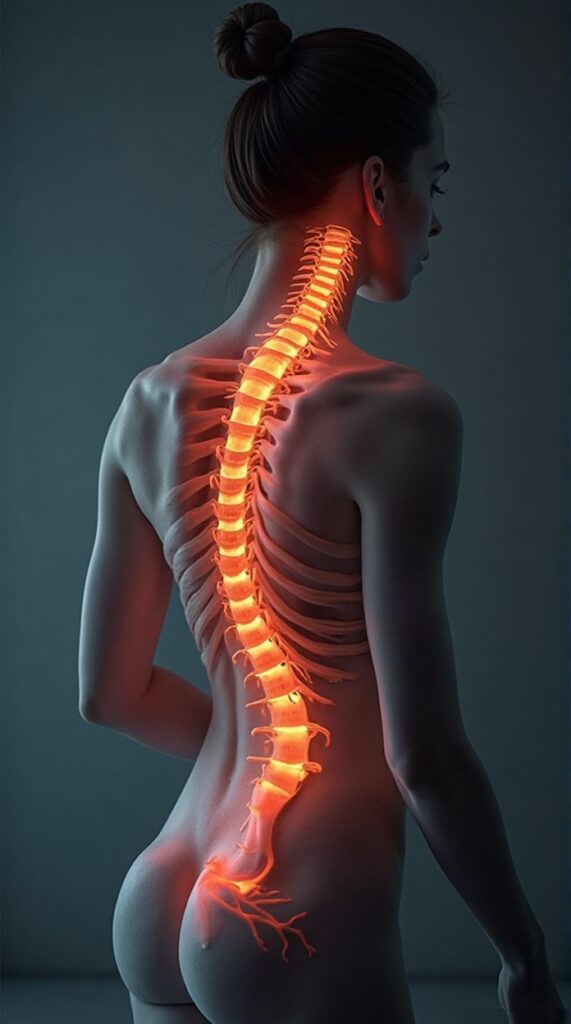
 Scoliosis is a three-dimensional change in the shape and alignment of the spine. It is not simply a case of having bad posture. The spine may curve from side to side, rotate, and change how your shoulders, ribs, and pelvis sit.
That is why a few random back exercises cannot address every patient’s needs.
When we talk about scoliosis treatment, we need to separate two things: improving how your body functions and changing the actual spinal curve.
What non-surgical scoliosis management can help with
A well-designed scoliosis rehabilitation program may help you:
- Reduce back pain and muscle tension.
- Improve posture awareness and body control.
- Build strength in the muscles that support your spine.
- Improve breathing and rib-cage movement when appropriate.
- Make daily activities, exercise, and work more comfortable.
- Support spinal stability and, in growing patients, help manage the risk of curve progression.
For children and teenagers who are still growing, specific scoliosis exercises may be part of a plan to help control progression. Bracing may also be recommended when appropriate.
For adults, treatment often focuses on managing discomfort, maintaining mobility, improving strength, and helping you stay active.
Can exercise completely straighten your spine?
This is where I want to be honest with you.
Exercise does not reliably reverse every structural scoliosis curve. Some people notice better posture, improved symmetry, or a more comfortable standing position. That does not necessarily mean the bones of the spine have permanently straightened.
Think of your spine like a flagpole supported by several guy-wires. The pole represents your spine, while the surrounding muscles and movement patterns help control how your body moves around it. Training those supports can improve control and stability. But pulling harder on one side will not automatically straighten the pole.
That is the principle behind responsible non-surgical scoliosis treatment Philippines patients can access through specialized rehabilitation. We focus on what can be improved safely, rather than promising a miracle correction.
The Core Pillars of Scoliosis Rehabilitation
1. Schroth Method: Learning to Move With Your Curve
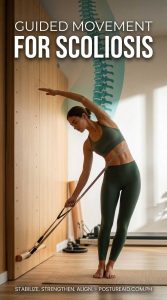
The is one of the best-known approaches to scoliosis-specific exercise. It uses individualized movements, breathing techniques, and posture awareness based on your spinal curve.
Instead of giving every patient the same list of exercises, a trained therapist assesses your curve pattern, rib position, pelvic alignment, and movement habits.
You may learn to:
- Recognize how your spine is positioned.
- Use specific breathing patterns to encourage better rib-cage movement.
- Practice corrected postures during standing and sitting.
- Strengthen muscles while maintaining your individual correction.
- Apply these movements during everyday activities.
For example, a patient with uneven shoulders may learn how to position their trunk differently while standing. Another patient with a rib prominence may work on breathing and body awareness that suit their curve.
Schroth is not about forcing your spine straight. It is about helping you develop better control of your particular body.
If you are searching for Schroth Method Therapy Makati, look for a physical therapist with appropriate scoliosis-specific training. Proper assessment matters more than simply following a popular exercise video.
2. SEAS: Building Active Spinal Control
SEAS, or Scientific Exercise Approach to Scoliosis, is another scoliosis-specific rehabilitation approach.
The focus is on active self-correction and functional exercises. In simple terms, you learn how to make your own posture corrections and maintain them while moving.
This is important because your spine does not only need support when you are lying on a treatment table. You need control while walking, sitting at work, lifting objects, and doing ordinary household tasks.
A SEAS-based program may include exercises that challenge your balance, coordination, and ability to maintain a corrected position. Your therapist adjusts the difficulty as you improve.
The purpose is not to make you hold a stiff posture all day. It is to help your body develop better movement strategies.
For patients looking for SEAS Scoliosis Therapy Manila, an individualized program can be useful when the goal is to build long-term skills rather than depend entirely on passive treatment.
3. General Strength Training: Your Spine Needs Support
Scoliosis-specific exercises are important, but general strength training also has a place in rehabilitation.
Your spine is supported by a network of muscles around your trunk, pelvis, hips, and shoulders. If these muscles are weak or poorly coordinated, everyday movements may feel more tiring or uncomfortable.
Depending on your assessment, useful exercises may include:
Core stability exercises
Examples include modified dead bugs, bird dogs, and controlled abdominal bracing. These exercises teach you to control your trunk while your arms and legs move.
Hip and leg strengthening
Glute bridges, sit-to-stands, and suitable squats can help build lower-body strength. Stronger hips and legs may make walking, climbing stairs, and lifting easier.
Back and shoulder exercises
Resistance-band rows, supported pulling exercises, and shoulder-blade control work may help improve upper-body strength and endurance.
Breathing and mobility exercises
Gentle thoracic mobility and breathing exercises may help patients who experience stiffness around the ribs or upper back.
The important part is technique. Two patients can perform the same exercise and need completely different modifications. A therapist should consider your pain, curve pattern, strength, balance, and goals before prescribing a routine.
4. Supportive Manual Therapy and Muscle Relaxation
Some patients with scoliosis experience tight muscles, trigger points, or stiffness around the back, neck, hips, and shoulders.
Manual therapy may help reduce discomfort and make movement easier. Depending on your needs, treatment may include soft-tissue techniques, joint mobilization, or other appropriate hands-on methods.
Dry needling for scoliosis treatment Philippines clinics may also offer is sometimes used to address muscular pain and trigger points. It is a symptom-management tool, not a method for physically straightening a structural spinal curve.
Craniosacral Therapy Makati is another service some patients explore for relaxation or symptom relief. Evidence for craniosacral therapy as a scoliosis-correction treatment is limited, so it should not replace active exercise, appropriate assessment, or medically indicated care.
I often explain this to patients using a simple analogy: manual therapy is like loosening a knot in a rope. It may make the rope feel less tight, but you still need to train how the whole system works.
Active rehabilitation should remain the foundation of your program.
Daily Lifestyle Adjustments That Make a Difference
Your exercise routine matters, but what you do for the rest of the day matters too.
Improve your workstation
If you sit for long hours, adjust your chair and desk so your feet are supported and your screen is close to eye level. Keep your keyboard and mouse within easy reach.
You do not need to maintain a rigid, perfectly straight posture every minute. Change positions regularly. Stand up, walk around, and give your body a break.
Pay attention to sleeping comfort
There is no single sleeping position that corrects scoliosis for everyone. Side sleeping with a pillow between your knees may feel comfortable for some people. Others prefer sleeping on their back with support under their knees.
Choose a position that allows you to rest without increasing pain. If a position consistently causes numbness, worsening pain, or significant discomfort, discuss it with your therapist.
Use posture supports wisely
Daily posture correctors or back supports may provide temporary comfort or a reminder to avoid slouching. They should not become a substitute for strengthening and movement practice.
A support is a little like training wheels on a bicycle. It can help you feel more secure while you develop control, but you still need to learn how to balance yourself.
For patients interested in daily posture supports, you can learn more about the services and resources available through Posture Aid.
The goal of Posture Correction is not to force your body into an uncomfortable position. It is to develop habits that feel natural and sustainable.
Exercises and Habits to Avoid if You Have Scoliosis
Having scoliosis does not mean you must avoid all exercise. In fact, staying active is often helpful. But some activities need modification, especially if they cause pain or place excessive demands on your spine.
Avoid forcing your spine straight
Do not aggressively pull, twist, or bend your spine in an attempt to correct the curve. Scoliosis is three-dimensional, and forcing one part of the body into position may create stress elsewhere.
Be cautious with heavy lifting and poor technique
Heavy deadlifts, squats, or overhead exercises are not automatically forbidden. Many people with scoliosis can perform strength training safely.
However, lifting loads that exceed your current ability, especially with poor trunk control or significant pain, can be problematic. Start with manageable resistance and progress gradually.
Do not copy random scoliosis exercise videos
An exercise that helps one patient may not suit another. A movement designed for a particular curve pattern may be inappropriate for someone with a different pattern.
Avoid routines that promise to straighten every scoliosis curve using the same five or ten exercises.
Avoid exercising through worsening pain
Mild muscle fatigue is different from sharp pain, increasing numbness, or symptoms that continue to worsen after exercise.
If an exercise consistently aggravates your symptoms, stop and have it reviewed. You may need a smaller range of motion, less resistance, a different position, or a completely different exercise.
When to Seek Care and Frequently Asked Questions
How do I start scoliosis rehabilitation?
Begin with an assessment from a qualified physical therapist experienced in scoliosis management. Bring your previous X-rays or medical reports if you have them.
Your therapist should review your symptoms, spinal curve, movement patterns, strength, and daily activities. From there, you can build a plan that matches your needs.
How long does scoliosis rehabilitation take?
There is no universal timeline. Some patients notice improvements in comfort or movement within several weeks. Changes in strength, body awareness, and exercise control often take longer.
For growing patients, curve monitoring and progression management may continue over months or years. Adults may need an ongoing exercise routine to maintain strength and manage symptoms.
Consistency matters more than doing an intense workout once in a while.
Can adults with scoliosis benefit from exercise?
Yes. Adults can benefit from appropriate strengthening, mobility work, scoliosis-specific exercise, and lifestyle adjustments. The goals may differ from those of a growing teenager, but age alone does not mean rehabilitation is pointless.
Can scoliosis be treated without surgery?
Many patients can manage symptoms and improve function through non-surgical care. Depending on the curve, age, symptoms, and progression risk, treatment may include exercise, observation, bracing, or other medical care.
Surgery is sometimes recommended for specific cases. A qualified medical team can help you understand your options.
Final Thoughts
The best scoliosis exercise program is not necessarily the hardest one. It is the one that fits your spine, your symptoms, and your daily life.
Schroth Method, SEAS, strength training, posture correction, and supportive hands-on care can all have a role when used appropriately. The key is individualized treatment and realistic expectations.
You do not need to be afraid of movement. You need the right guidance.
If you are looking for Scoliosis Rehab Philippines services or non-surgical scoliosis treatment Manila options, start with a professional assessment and build your rehabilitation process from there.
Your spine may have a curve, but that does not mean your life has to revolve around it. With the right plan, you can work toward better movement, more confidence, and a stronger, more comfortable everyday life.